
Finding the best deals on the top products, services, and experiences can become an exhausting exercise. The web is full of options, with endless data about each choice available to today’s shopper. Perhaps this is why people are increasingly turning to AI shopping assistants for help.
As of late 2025, approximately 250 million customers had used Amazon’s Rufus, and users who engaged with this AI-powered shopping experience were 60% more likely to complete a purchase.
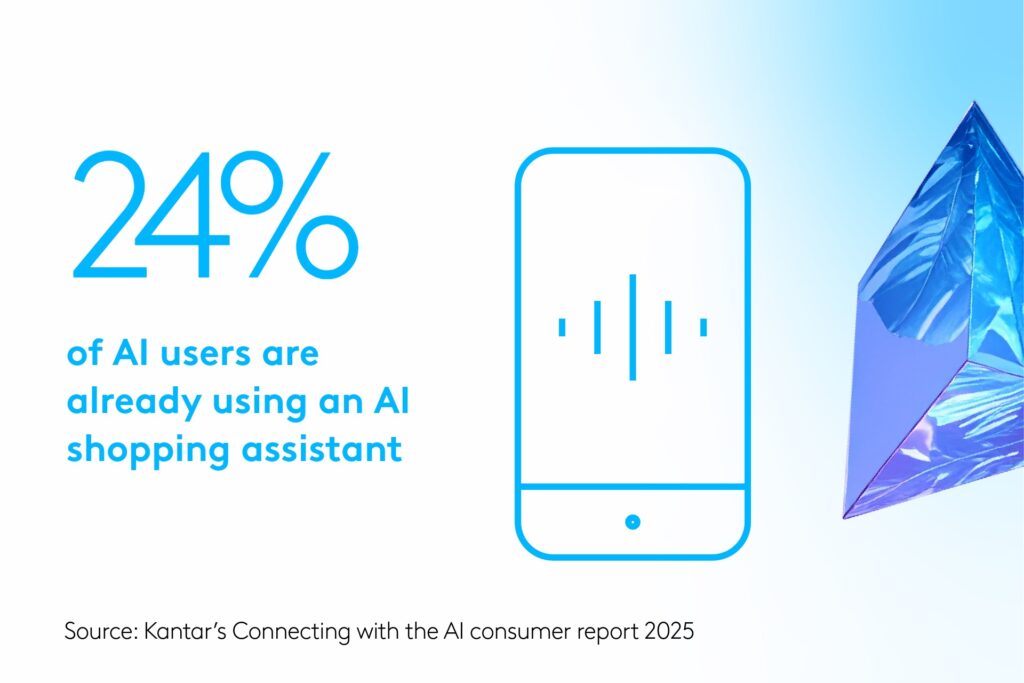
According to Jane Ostler, Chief Insights Officer at Kantar, 24% of AI users currently use an AI shopping assistant. She believes CMOs now need their brands to actively service these non-human consumers while continuing to persuade and entertain humans through traditional attention-seeking channels.
We’ve entered a new phase of digital disruption where the buyer is increasingly an algorithm, not a person. This new deployment of agentic AI agents will require strategic responses and a new way of thinking. It may also require a new humility that leads to the reshaping of business models, because AI agents are not responding to, or influenced by, online ads.
Amazon.com generates $56 billion per year from ads, so it’s not surprising that the company is nervous about non-Amazon shopping assistants scouring its platform for deals. Last November, Amazon sued AI provider Perplexity in a quest to deny access to the company’s shopping assistants (and those who would use them to shop the e-com superstore).
Perplexity argues that sort of exclusion is unlawful and unfair. On March 9, 2026, a federal judge disagreed with them and barred Perplexity’s Comet AI browser from accessing Amazon accounts or making purchases on users’ behalf. Subsequently, the 9th U.S. Circuit Court of Appeals halted the order while it considers Perplexity’s request for a longer-term pause that would last through its appeal of the district court’s decision.
Perplexity claims that the lawsuit lacks merit and is a “bald attempt” to block Amazon users from using Comet because AI agents “don’t have eyeballs to see the pervasive advertising Amazon bombards its users with.” In a Perplexity blog post from last November, the company didn’t hold back. Here’s a short section of the text.
Amazon should love this. Easier shopping means more transactions and happier customers. But Amazon doesn’t care. They’re more interested in serving you ads, sponsored results, and influencing your purchasing decisions with upsells and confusing offers…It’s not just bullying, it’s bonkers.
In traditional retail spaces, the shopkeeper retains the right to deny service to unruly shoppers for whatever reasons they choose, but does this sort of common courtesy extend to e-commerce sites? And will Amazon continue to deny access to other AI-powered shopping assistants in order to promote its own and protect its advertising revenue? The courts will have their say, as will shoppers who may soon direct their assistants to shop elsewhere.
Discover more from Adpulp
Subscribe to get the latest posts sent to your email.